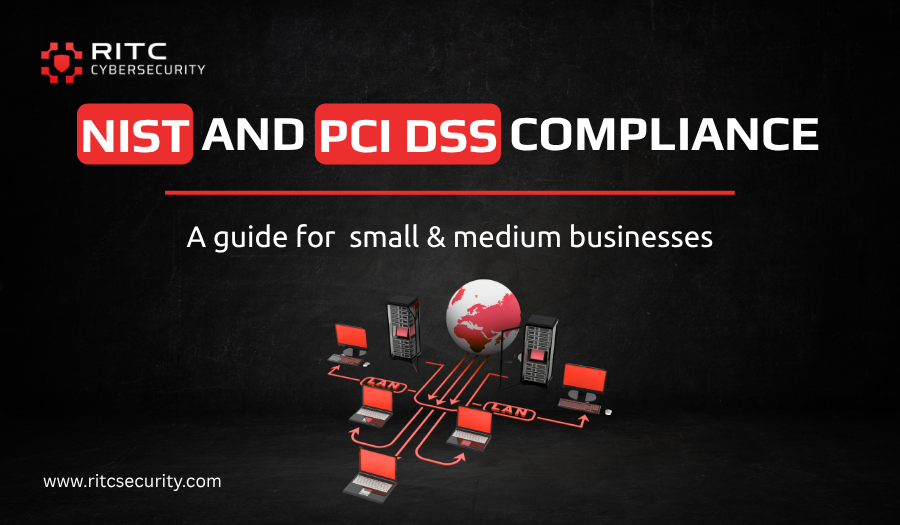
A Guide to NIST and PCI DSS Compliance for US SMBs
Author: Mike Rotondo Published on: May 14, 2025
In today’s digital-first economy, data is the lifeblood of nearly every small and medium-sized business (SMB). Whether you are managing customer orders, handling payments, or running marketing campaigns, the sensitive data you collect and store is increasingly targeted by cybercriminals.
As threats multiply and data breaches continue to make headlines, SMBs in the United States face growing pressure to secure their operations for survival, customer trust, competitiveness, and legal compliance.
Two of the most widely adopted frameworks for strengthening cybersecurity are NIST (National Institute of Standards and Technology) and PCI DSS (Payment Card Industry Data Security Standard).
Although these standards may seem overwhelming at first, especially for resource-constrained SMBs, they provide a practical roadmap for reducing risk and improving compliance.
Why Compliance Is Important for SMBs
Many business owners assume cybercriminals only target large enterprises. In reality, SMBs are increasingly targeted because they often have fewer security controls.
A successful cyberattack can lead to financial loss, reputational damage, regulatory penalties, and even business closure.
By adopting frameworks like NIST and PCI DSS, SMBs can:
- Reduce the likelihood of data breaches.
- Meet regulatory and industry requirements.
- Build trust with customers and partners.
- Avoid costly fines and lawsuits.
Understanding NIST: The Cybersecurity Blueprint
What Is NIST?
The NIST Cybersecurity Framework (CSF) is a voluntary framework developed by the U.S. Department of Commerce to help organizations of all sizes identify, assess, and reduce cybersecurity risk.
Originally designed for critical infrastructure, it is now widely used across all industries.
Core Functions of the NIST CSF
- Identify: Understand assets, threats, and compliance obligations.
- Protect: Implement access controls, security awareness, and safeguards.
- Detect: Monitor systems for malicious activity.
- Respond: Execute incident response procedures.
- Recover: Restore operations and improve after incidents.
Why NIST Matters to SMBs
NIST is flexible, scalable, and risk-based. It provides SMBs with a structured foundation for evaluating their security posture and building a practical improvement plan.
Demystifying PCI DSS: Protecting Cardholder Data
What Is PCI DSS?
PCI DSS is a mandatory compliance standard for organizations that store, process, or transmit credit and debit card data.
It is maintained by the Payment Card Industry Security Standards Council (PCI SSC) and applies to businesses of all sizes, including online stores, brick-and-mortar retailers, and service providers.
Key Requirements of PCI DSS
- Install and maintain secure firewalls.
- Do not use default system passwords.
- Protect stored cardholder data.
- Encrypt cardholder data during transmission.
- Use anti-malware solutions.
- Secure systems and applications.
- Restrict access to cardholder data.
- Assign unique IDs to system users.
- Restrict physical access to data.
- Track and monitor access to resources.
- Test security systems regularly.
- Maintain an information security policy.
Why PCI DSS Matters to SMBs
Non-compliance can lead to fines, penalties, and increased liability after a breach. PCI DSS compliance also helps build customer trust and protects payment-related revenue.
Key Differences Between NIST and PCI DSS
| Feature | NIST | PCI DSS |
|---|---|---|
| Type | Voluntary cybersecurity framework | Mandatory payment security standard |
| Scope | Overall cybersecurity risk management | Protection of payment card data |
| Flexibility | Highly flexible and risk-based | Prescriptive and control-specific |
| Applicability | All industries | Organizations handling cardholder data |
| Objective | Improve cybersecurity posture | Protect cardholder information |
Think of NIST as a broad cybersecurity strategy and PCI DSS as a specialized standard for payment data protection.
Challenges SMBs Face with Compliance
- Limited IT Resources: Many SMBs do not have dedicated security personnel.
- Budget Constraints: Security tools and audits can be expensive.
- Lack of Awareness: Business owners may not fully understand compliance requirements.
- Complex Technology Environments: Remote work, BYOD, and cloud services increase risk.
- Documentation and Monitoring: Both frameworks require policies, logs, and regular reviews.
Practical Steps to Get Started
1. Evaluate Risk and Data Flows
Identify where sensitive information is stored, processed, and transmitted.
2. Choose the Right Tools
Select cost-effective technologies such as endpoint security, secure Wi-Fi, firewalls, and encryption tools.
3. Train Employees
Conduct regular security awareness training on phishing, password management, and secure data handling.
4. Document Policies
Create written policies for access control, data retention, and incident response.
5. Seek External Help
Managed security providers and compliance consultants can help accelerate your progress.
Compliance Is a Journey, Not a Destination
Cybersecurity and compliance are ongoing efforts. Threats evolve constantly, and frameworks such as NIST and PCI DSS are updated regularly.
Start with foundational controls like strong passwords, firewalls, and employee security awareness training to significantly reduce risk.
Here’s What to Remember
NIST and PCI DSS provide practical frameworks that help SMBs secure operations, protect customer data, and demonstrate responsible business practices.
Understanding how these standards differ and complement each other allows you to make informed decisions and build a more resilient organization.
Related blog: Introduction to Compliance Standards: What Is NIST, PCI DSS, and Why They Matter for SMBs?